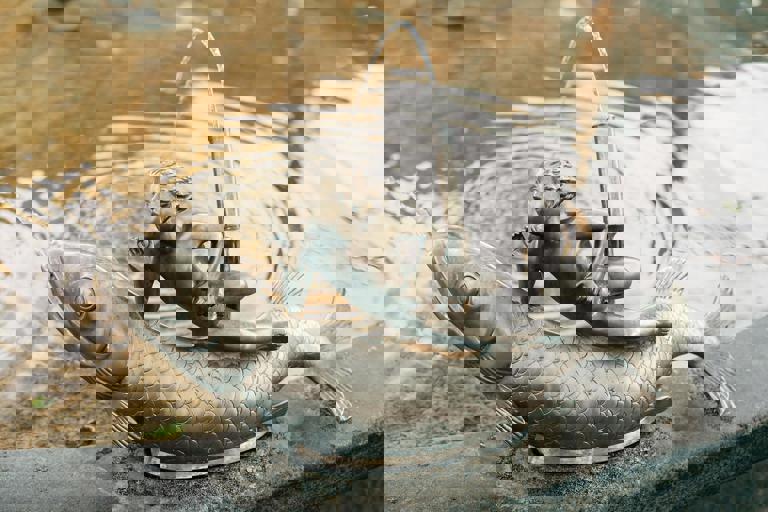
A new chapter in Toronto’s public art scene has opened with the unveiling of an interactive sculpture transforming the heart of downtown into a dynamic playground for all ages. The massive installation, located at Nathan Phillips Square, is not just an object to be admired from afar, but rather an artwork meant to be explored, touched, and reimagined by those who pass through the bustling city center.
Commissioned by the City of Toronto as part of an initiative to invigorate public spaces, the sculpture—entitled “Urban Resonance”—is the work of internationally acclaimed Canadian artist Lauren Foulkes. Measuring nearly 30 meters in length and assembled from polished steel, reclaimed wood, and programmable LED elements, 'Urban Resonance' twists and loops in surprising ways, inviting the curious to climb, push, spin, and even rearrange certain movable sections.
Residents and visitors alike cannot help but be drawn in by the installation’s playful spirit. “I love that Toronto is experimenting with interactive art,” said local teacher Amira Bell. “My kids were immediately drawn to it—they made new friends as they played, and I found myself wanting to join in as well.” The piece's design subtly references the city’s multicultural diversity with sections inspired by Indigenous motifs, modern cityscapes, and familiar Canadian icons like maple leaves and hockey sticks.
Unlike conventional sculpture that is meant to be observed from a respectful distance, 'Urban Resonance' explicitly encourages engagement. Everyday, visitors are seen spinning its kinetic elements, walking its undulating ramps, or simply resting on its low, wooden platforms. The artist envisioned the sculpture as a catalyst for spontaneous collaboration, a place “where strangers might become teammates in play or fellow explorers,” Foulkes explained during the unveiling.
City officials hail the project as a step towards making Toronto’s public spaces more inclusive and engaging. Councillor Ming Lee, who helped champion the initiative, remarked, “Public art can sometimes feel inaccessible or intimidating. Projects like this break down barriers, showing that art can belong to everyone—children, adults, residents, or tourists. It’s not just decoration: it’s about participation and community building.”
The artwork’s interactive features go beyond the physical. Integrated sensors respond to movement and touch, triggering shifts in light and sound that are unique to each day’s activities. This ever-changing display means the sculpture never quite looks or sounds the same two days in a row. Passersby often linger to see how their actions ripple through the installation, sparking impromptu performances or group games.
Local businesses surrounding Nathan Phillips Square have reported an uptick in foot traffic since the installation opened. Café owner Sheraz Niazi shared, “We’ve noticed more families, especially on weekends. People come to experience the sculpture, then stay for coffee or lunch. It’s breathing new life into this part of the city and supporting local commerce.” The Toronto Arts Council estimates an increase of up to 20% in square visitation since the piece’s debut.
The project drew inspiration from other groundbreaking interactive artworks, such as London’s ‘Playable City’ initiative and Manhattan’s ‘The Vessel.’ However, 'Urban Resonance' stands out for its overt invitation to physical play and touch—a bold move in a city often characterized by more reserved artistic traditions. Its presence challenges both artists and audiences to reconsider how art can shape and be shaped by its community.
Not everyone has embraced the project without reservations. Some residents have voiced concerns about safety and wear, particularly during busy events or inclement weather. The city responded with a commitment to maintain the sculpture regularly and to station staff nearby during peak hours. Early statistics show that while minor scuffs and fingerprints are frequent, no major incidents have been reported, thanks in part to its carefully engineered modular design.
Cultural leaders argue that these growing pains are part of the city’s evolution. “Toronto is still learning how to live with public art that asks something of us—not just to see, but to move, touch, and share space,” said Dr. Elise Caron, a professor of urban studies at the University of Toronto. “The challenges we face now are the sign of thriving, engaged civic life.”
Beyond recreation, 'Urban Resonance' has sparked broader conversations about accessibility and representation in the arts. The installation’s designers consulted with accessibility advocates throughout development, ensuring features like textured paths and gradual slopes so that people of all abilities can participate. This commitment has led to praise from disability groups, who see the sculpture as a model for future inclusive projects.
As summer approaches, the city is planning a series of free workshops and events at the square, including guided explorations of the sculpture, artist-led talks, and community co-creation days where new features can be temporarily added. Organizers hope these programs will deepen people’s sense of ownership and connection to the artwork, further blurring the line between artist, audience, and participant.
The legacy of 'Urban Resonance' is still in its early stages, but its impact is already being felt across Toronto. By turning a public square into an immersive playground, the sculpture challenges traditional concepts of art and shared space. As more cities look to activate their urban environments, Toronto’s bold step may well set a new standard for what is possible when art is made not just for the people, but truly with them.