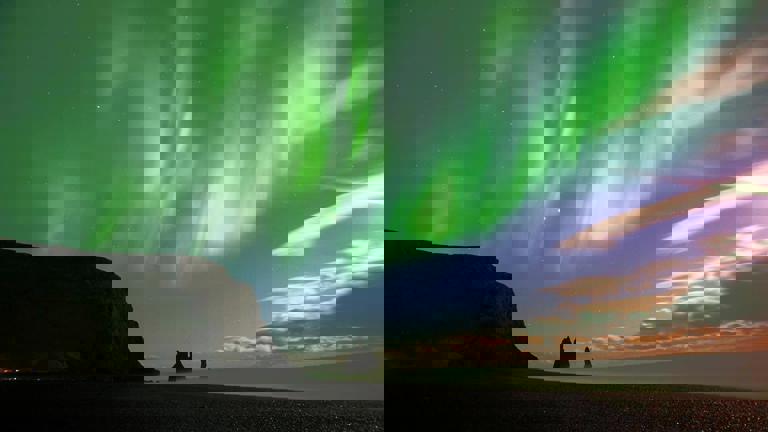
The night sky over Yukon erupted in a dazzling display of color this week, as the Northern Lights shimmered and danced across the horizon. Residents and visitors alike were treated to an early summer spectacle, unusual for its intensity and timing. While the aurora borealis is a familiar sight in this northern territory, the magnitude and brilliance of this recent event drew particular attention from stargazers, photographers, and scientists.
Experts attribute the vibrant auroras to heightened solar activity. Dr. Leah Albert, a physicist at the University of British Columbia, explained, “Unusually strong solar winds from recent sunspot eruptions have collided with Earth’s magnetic field, triggering these magnificent light shows.” The interplay of charged particles and atmospheric gases produced curtains of green, purple, and crimson that illuminated the Yukon night for hours at a time.
Local communities quickly spread the word via social media, alerting enthusiasts to prime viewing locations outside Whitehorse, Dawson City, and the surrounding wilderness. Many gathered in open spaces and remote vantage points, cameras at the ready, hoping to capture the phenomenon in all its glory. The event sparked a spontaneous sense of camaraderie among spectators, who shared tips, stories, and awe under the swirling lights.
For the Yukon’s tourism industry, the unexpected timing of the auroras offered a welcome boon. While winter months traditionally see the highest influx of Northern Lights tourists, several local tour operators reported a spike in bookings for guided excursions and night sky photography workshops. "We've never had so many calls for June tours," said Shelley Mason, owner of Arctic Skies Tours. "People are willing to travel at a moment’s notice for scenes like this."
Professional and amateur photographers flocked to the region, eager to capture the celestial ballet. Social media feeds quickly filled with long-exposure shots revealing intricate arcs and ribbons of light stretching across the heavens. "When you witness colors this vivid, it changes your whole perspective on the night sky," said wildlife photographer Linh Tran, who traveled from Vancouver for the event. "It's pure magic up here."
Besides the cultural and aesthetic appeal, scientists also drew important observations from the display. Research teams from the Canadian Space Agency set up monitoring equipment to record the intensity and duration of the auroras. Data gained from these events aids ongoing studies into space weather and geomagnetic storms, which can impact everything from communications systems to power grids across Canada.
Indigenous groups in the Yukon region regard the aurora borealis as a cherished and spiritual phenomenon. For centuries, First Nations communities have incorporated the lights into oral histories and traditions, often as messages from ancestors or as symbols of cyclical renewal. Elders who witnessed the spectacle remarked on the deeper sense of connection to the land and the cosmos during these nights of extraordinary brightness.
The early summer timing was especially notable, as the Yukon’s short nights and lingering twilight typically limit aurora sightings at this time of year. Meteorologist Claire Bouchard noted, "This kind of display is rarer in June because the nights are so brief and light isn’t fully gone. That makes this event even more remarkable for us, and for everyone who traveled to see it."
Local governments responded to the influx of visitors by coordinating with parks staff and law enforcement to ensure safe, respectful viewing. Temporary signage was posted to protect fragile tundra environments, guiding cars to designated spots and asking onlookers to minimize light pollution. Community centers extended their hours, providing warm drinks and shelter as temperatures dropped overnight, ensuring a comfortable viewing experience for all ages.
As the spectacle drew to a close, residents and tourists alike reflected on a memorable start to summer under Yukon’s radiant skies. Discussions are already underway about how this could impact future tourism strategies and aurora research. For now, however, the stories and images from these nights serve as vivid reminders of the sky’s power to inspire wonder, connect communities, and reinforce the unique magic of Canada’s Far North.